
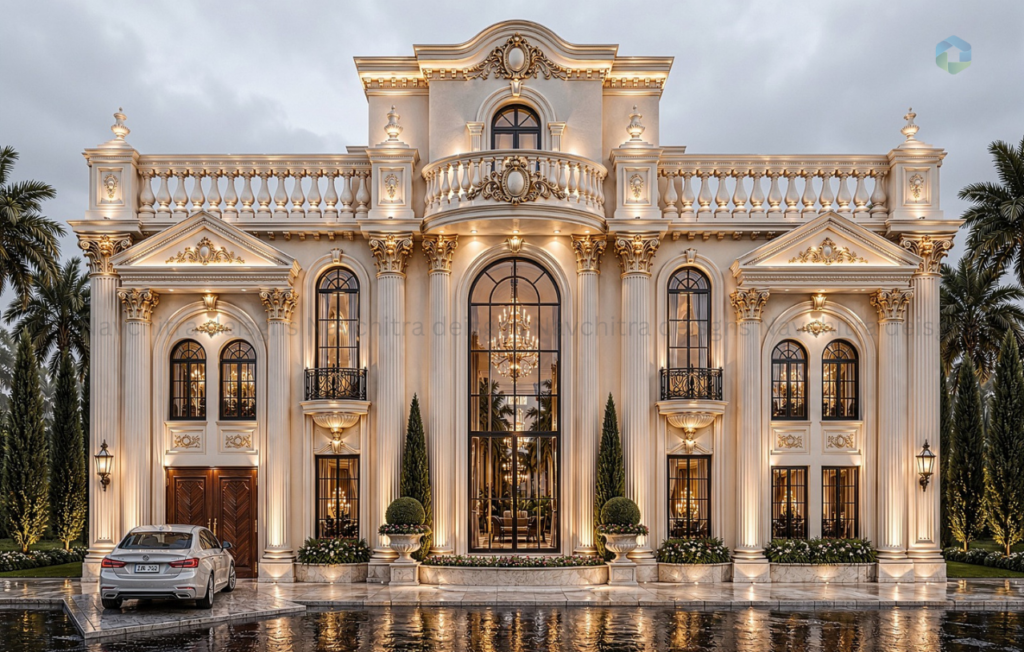
Best Interior Designer in Gurgaon: The Complete 2026 Guide to Choosing the Right Design Partner
Gurgaon (Gurugram) has become one of India’s most dynamic real estate markets — a city of glass towers, sprawling gated communities, and a fast-growing population of professionals who want their homes and offices to reflect the same ambition as their careers. With this growth has come a boom in demand for interior design services, and today the city is home to dozens of studios, freelancers, and full-service design-build firms all claiming to be the best interior designer in Gurgaon.
But how do you actually separate the best interior designer in Gurgaon from the rest? This guide walks you through everything you need to know — from what makes a design firm genuinely reliable, to the specific questions you should ask before signing a contract, to the sectors and property types where Gurgaon’s interior design scene is thriving.
Why Gurgaon’s Interior Design Market Is Booming
Gurgaon’s transformation from a satellite town into a global business hub has reshaped how people think about their living and working spaces. A few factors are driving the current surge in demand for professional interior design:
1. High-rise living has changed space expectations. Sectors like DLF Phase 1 to 5, Golf Course Road, Golf Course Extension Road, Sohna Road, and MG Road are dominated by premium apartment complexes where floor plans are compact but expectations for luxury are high. Homeowners want smart storage, multi-functional layouts, and finishes that feel high-end without wasting space.
2. The rise of hybrid and remote work. Since more professionals now split time between home and office, dedicated home-office corners, acoustic considerations, and ergonomic furniture have become standard requests rather than luxuries.
3. Corporate Gurgaon needs design too. With hundreds of MNCs, startups, and co-working spaces headquartered in Cyber City, Udyog Vihar, and Sector 44, commercial interior design — office fit-outs, reception areas, cabins, and collaborative work zones — is a major growth segment alongside residential work.
4. A younger, design-conscious demographic. Gurgaon’s population skews young and well-traveled. Many residents have seen international design standards firsthand and want that same sensibility applied to their Indian homes — without losing functionality suited to Indian lifestyles (modular kitchens, pooja rooms, vastu compliance, and joint-family layouts).
All of this has created strong demand — and, inevitably, strong competition among firms claiming to be the best interior designer in Gurgaon.
What “Best” Actually Means When Searching for an Interior Designer in Gurgaon
The word “best” gets thrown around loosely in this industry, so it’s worth breaking down what it should actually mean when you’re evaluating the best interior designer in Gurgaon for your own home or office.
1. A Proven Track Record, Not Just Portfolio Photos
Anyone can put together an attractive portfolio. What truly separates the best interior designer in Gurgaon from the rest is consistency — has the firm delivered multiple projects successfully, on time, and within budget? Ask for references from at least two or three recent clients, and if possible, visit a completed project in person rather than relying solely on photographs, which can be professionally staged and lit.
2. End-to-End Capability
The best interior designer in Gurgaon typically offers more than just mood boards and 3D renders. Look for firms that can manage:
- Space planning and layout design
- Modular furniture and custom carpentry
- Electrical and civil coordination
- Vendor and contractor management
- Material sourcing and quality control
- Project timelines and on-site supervision
A designer who only creates concepts and hands off execution to unknown third parties introduces risk — miscommunication between design intent and on-ground execution is one of the most common reasons renovation projects go over budget or miss deadlines.
3. Transparent Pricing
Interior design costs in Gurgaon can vary dramatically — anywhere from ₹1,200 to ₹4,000+ per square foot depending on the scope, materials, and finish level. The best firms give you a detailed, itemized quote upfront rather than a vague lump sum, so you know exactly what you’re paying for at each stage: design fees, material costs, labor, and any markup on procurement. Industry bodies like the Institute of Indian Interior Designers (IIID) publish general guidelines on professional fee structures that can be a useful reference point when comparing quotes.
4. Design That’s Tailored, Not Templated
A recurring complaint among Gurgaon homeowners is receiving a “cookie-cutter” design that looks like it was lifted from a catalogue. The best designers spend real time understanding how you actually live — your storage habits, your family structure, whether you cook daily or order in, whether you work from home, and your aesthetic preferences — before proposing a layout.
5. After-Sales Support
Interiors are not a one-time transaction. Modular fittings need adjustment, warranties need honoring, and small defects inevitably surface in the months after handover. A firm that offers a genuine post-handover support period (ideally 6–12 months) demonstrates confidence in its own workmanship.
Residential vs. Commercial Interior Design in Gurgaon
It’s worth understanding that residential and commercial interior design are different disciplines, even though many firms in Gurgaon offer both.
Residential design in Gurgaon typically covers:
- 2BHK, 3BHK, and 4BHK apartment interiors
- Independent floors and builder floors
- Villas in gated communities (DLF Alpha Corp, Central Park, Vatika, and similar)
- Modular kitchens and wardrobes
- False ceiling and lighting design
- Pooja room and balcony design
Commercial design in Gurgaon typically covers:
- Corporate office fit-outs and cabin design
- Reception and lobby design
- Co-working and collaborative space planning
- Retail store interiors
- Restaurant and hospitality interiors
- Vastu-compliant commercial layouts (still a common requirement even in modern corporate spaces)
If you’re evaluating a firm, ask specifically about their experience in the category relevant to you — a designer with a strong residential portfolio isn’t automatically equipped to handle a 5,000 sq. ft. office fit-out, and vice versa.
Popular Gurgaon Localities and Their Design Needs
Different parts of Gurgaon come with different design considerations, largely shaped by the age and type of construction — and understanding this is useful context when evaluating the best interior designer in Gurgaon for your specific locality.
DLF Phases (1–5) and Golf Course Road — Home to some of Gurgaon’s most premium builder floors and apartments. Designs here often lean toward contemporary luxury, with an emphasis on high-end materials, italian marble or engineered stone, and statement lighting.
Golf Course Extension Road and Sohna Road — Newer high-rise developments with modern floor plans, often requiring smart, space-efficient layouts and modular solutions since apartment sizes here tend to be tighter than in the older DLF sectors.
Sushant Lok and South City — A mix of independent floors and older apartment complexes, frequently requiring more structural or civil intervention alongside interior work, since many of these properties are 15–20+ years old.
Sector 56, Sector 57, and MG Road — A blend of residential and commercial zones, popular for both home interiors and small office setups.
New Gurgaon (Sectors 82–115) — Rapidly developing sectors with newer construction, popular among young families and first-time homeowners looking for practical, budget-conscious design solutions.
Understanding your locality’s typical construction style can help set realistic expectations for what’s achievable — and at what cost.
Questions to Ask Before Hiring the Best Interior Designer in Gurgaon for Your Project
Before you commit, it’s worth running through a checklist of questions that separate serious firms from ones that overpromise:
- Can I see 2–3 completed projects similar in scope to mine? Renders are one thing; a finished, lived-in space tells you far more.
- What is included in the design fee, and what is billed separately? Get clarity on furniture, civil work, false ceiling, electrical, and painting costs.
- Who manages on-site execution — your own team or subcontractors? This affects accountability if something goes wrong.
- What is the expected timeline, and what happens if it’s delayed? Ask if there are penalty clauses or guarantees.
- Is there a formal contract with payment milestones tied to project stages? Avoid firms that ask for large upfront payments without a clear schedule.
- What warranty do you offer on modular furniture and fittings? Most reputable firms offer at least 1–2 years on modular work.
- Do you handle vastu compliance if required? Many Gurgaon households, especially joint families, still prioritize this.
- Can you work within my specific budget, or is there a minimum project size you take on? Some firms specialize in premium, high-ticket projects only.
A designer who answers these clearly and without hesitation is generally a safer bet than one who deflects or gives vague answers — and it’s often the clearest sign you’ve found the best interior designer in Gurgaon for your specific project.
Design Trends Shaping Gurgaon Homes in 2026
Interior design is never static, and Gurgaon — being one of India’s more design-forward cities — tends to adopt new trends quickly. Some of what’s currently popular:
Warm minimalism. A move away from stark white minimalism toward warmer palettes — muted earth tones, wood finishes, and soft textiles — that feel calming rather than clinical.
Multi-functional rooms. With hybrid work here to stay, spare bedrooms are increasingly designed to double as home offices, using foldable desks, murphy beds, and modular partitions.
Statement kitchens. Open and semi-open kitchen layouts with island counters are becoming more common in larger apartments, moving away from the traditional closed-kitchen format.
Sustainable and low-VOC materials. Growing awareness around indoor air quality has increased demand for low-emission paints, engineered wood over solid hardwood in some applications, and better ventilation planning. Organizations such as the Indian Green Building Council (IGBC) offer certification frameworks that some premium residential and commercial projects in Gurgaon now reference when selecting sustainable materials.
Smart home integration. Motorized curtains, app-controlled lighting, and integrated home automation are moving from luxury add-ons to fairly standard requests, especially in new-build apartments.
Biophilic touches. Indoor plants, natural light optimization, and materials like rattan, jute, and stone are being used to bring a sense of nature into compact urban homes.
A designer who is aware of and can advise on these trends — rather than simply repeating a fixed design formula across every project — is generally better positioned to deliver a home that feels current rather than dated within a few years. This adaptability is often what truly distinguishes the best interior designer in Gurgaon from firms that rely on the same template for every client.
The Full-Service Advantage: Design, Architecture, and Construction Under One Roof
One distinction worth understanding when comparing Gurgaon interior designers is the difference between a pure interior design studio and a full-service design-and-build firm.
A pure interior design studio typically handles the creative and planning side — layouts, mood boards, material selection, and furniture design — but relies on external contractors for structural, civil, or architectural work. This can work well for straightforward interior-only projects, but it introduces a coordination gap when structural changes are involved.
A full-service firm, by contrast, brings interior design, architecture, and construction capabilities together under one team. This matters most when:
- You’re renovating an older independent floor or villa that needs structural changes
- Your project involves both interior and exterior/landscape work
- You want a single point of accountability rather than juggling multiple vendors
- Your timeline is tight and you can’t afford miscommunication between designers and contractors
Navchitra Designs, headquartered in Delhi NCR with a dedicated presence serving Gurgaon, is one example of this full-service model — offering interior design, architecture, construction, and landscape design under a single team, with over 15 years of combined experience and 65+ completed projects across residential and commercial categories. For homeowners who want design continuity from the first sketch to the final coat of paint — without managing multiple vendors themselves — this integrated approach can significantly reduce the friction that often derails renovation projects.
Budgeting for Interior Design in Gurgaon: A Realistic Breakdown
While every project is different, here’s a general sense of what Gurgaon homeowners can expect to budget for, depending on the finish level:
- Basic/Functional finish: ₹1,200–₹1,800 per sq. ft. — laminate-based modular furniture, standard fittings, minimal false ceiling work.
- Mid-range finish: ₹1,800–₹2,800 per sq. ft. — better quality laminates or veneers, more detailed false ceiling and lighting design, semi-customized furniture.
- Premium/Luxury finish: ₹2,800–₹4,500+ per sq. ft. — high-end materials like natural stone, imported fittings, fully bespoke furniture, and elaborate lighting and automation.
These figures are indicative and can shift based on the property’s condition, whether civil work is required, and current material costs. Always ask for a detailed, room-by-room breakdown rather than accepting a single blended rate — it makes it much easier to identify where costs can be trimmed if needed, and it’s one of the clearest ways to tell whether you’re actually working with the best interior designer in Gurgaon for your budget.
Red Flags to Watch Out For When Searching for the Best Interior Designer in Gurgaon
Not every interior design firm operating in Gurgaon operates with the same standards. Some warning signs worth taking seriously:
- Unusually low quotes compared to the market average — often a sign of corners being cut on material quality or hidden costs added later.
- No written contract or payment schedule — always insist on documentation before making any payment.
- Reluctance to share past client references or completed project addresses you can visit.
- Pressure to pay large amounts upfront before any design work has even begun.
- Vague answers about warranty and after-sales support.
- No physical office or verifiable business address — a legitimate, established firm should have a traceable presence you can visit if needed.
Taking the time to verify these details before signing anything can save significant stress — and money — later in the process, and is a core part of vetting the best interior designer in Gurgaon for your project.
The Design Process: What to Expect, Step by Step
One of the biggest sources of anxiety for first-time renovators is simply not knowing what the process looks like. While every firm structures things slightly differently, a professional interior design engagement in Gurgaon generally follows a predictable sequence:
Step 1: Initial Consultation. This is usually a free or low-cost meeting where the designer understands your property, your family or team structure, your budget range, and your general aesthetic preferences. Bring reference images, Pinterest boards, or photos of spaces you like — it helps the designer calibrate quickly rather than guessing at your taste.
Step 2: Site Measurement and Assessment. A designer or site engineer visits the property to take precise measurements, check electrical points, plumbing lines, structural columns, and natural light direction. This step is critical — designs based on inaccurate measurements are one of the most common causes of costly on-site corrections later.
Step 3: Concept Design and Layout. Based on the consultation and site visit, the designer proposes one or more layout options along with a rough material and color palette. This is the stage to be vocal about what you like and don’t like — changes here are far cheaper than changes made after execution begins.
Step 4: 3D Visualization. Most firms now provide photorealistic 3D renders so you can see how the space will actually look before committing. Use this stage to check furniture scale, walking space, and lighting placement carefully.
Step 5: Detailed Quotation and Contract. Once the design is finalized, you should receive an itemized bill of quantities (BOQ) covering materials, labor, and any design fees, along with a formal contract outlining payment milestones and timelines.
Step 6: Execution and Site Supervision. This is the longest phase, typically spanning 6–16 weeks depending on scope — covering civil work, electrical, carpentry, painting, and installation. Ask how often the designer or project manager will personally visit the site during this phase; weekly updates with photos are a reasonable minimum expectation.
Step 7: Handover and Snagging. Before final payment, walk through the completed space with the designer and note any defects or incomplete items (this is called a “snag list”). A good firm will address these promptly rather than treating handover as the end of their responsibility.
Step 8: Post-Handover Support. As mentioned earlier, reputable firms offer a warranty period for modular work and remain reachable for minor adjustments in the months following completion.
Understanding this sequence upfront helps you set realistic expectations for timelines and reduces friction with your design team, since you’ll know what to expect — and what to ask for — at each stage.
How Long Does an Interior Design Project Typically Take in Gurgaon?
Timelines vary significantly by scope, but as a general reference point for Gurgaon projects:
- Single room (bedroom, home office): 3–5 weeks
- Modular kitchen only: 4–6 weeks
- Full 2BHK apartment: 8–12 weeks
- Full 3BHK apartment: 10–16 weeks
- Independent floor or villa with civil work: 16–24 weeks or more
- Commercial office fit-out (mid-size): 6–14 weeks depending on scale
Delays are common in this industry, often due to material availability, custom order lead times (especially for imported fittings or specific stone/marble), or monsoon-related disruptions to civil work. Building in a buffer of 2–3 weeks beyond the quoted timeline is a realistic expectation, and any firm that promises an unusually fast turnaround on a large project is worth questioning further.
Sustainability and Vastu: Two Considerations Gurgaon Homeowners Often Prioritize
While not every client cares equally about both, these two considerations come up often enough in Gurgaon specifically that they’re worth addressing directly.
Vastu compliance remains an important consideration for a large share of Gurgaon’s homeowners, particularly in joint-family households and among buyers from more traditional backgrounds. This can influence decisions like the placement of the pooja room, the direction the main entrance faces, kitchen positioning relative to the rest of the home, and even furniture orientation in bedrooms. If this matters to you, raise it explicitly during the initial consultation — not every designer has deep vastu expertise, and it’s better to know upfront than to request major layout changes mid-project.
Sustainable design is a growing priority, especially among younger homeowners and corporate clients focused on ESG considerations for office spaces. This can include specifying low-VOC paints and adhesives, prioritizing locally sourced materials over imported ones to reduce carbon footprint, designing for better natural ventilation and daylighting to reduce dependence on air conditioning and artificial lighting, and choosing durable materials that reduce the need for frequent replacement. If sustainability is a priority for you, ask your designer directly about their approach to material sourcing and energy-conscious design — it’s not yet a universal default in the industry, so it helps to confirm rather than assume.
Interior Design for Different Life Stages and Household Types
Gurgaon’s population is diverse, and the “right” design approach often depends heavily on who’s actually living in — or working from — the space.
Young professionals and couples in 1–2BHK apartments typically prioritize compact, multi-functional furniture, a strong home-office setup, and a contemporary aesthetic that photographs well for social media, without necessarily needing extensive storage for a large family’s belongings.
Growing families with young children often need more emphasis on durable, easy-to-clean materials, rounded furniture edges for safety, ample storage for toys and school supplies, and flexible spaces that can be reconfigured as children grow older.
Joint families and multi-generational households, common in many of Gurgaon’s older sectors and independent floors, typically require more careful space planning to balance privacy with shared common areas, along with vastu compliance and, often, a more traditional or transitional aesthetic that blends modern functionality with familiar cultural elements.
Retired or senior homeowners frequently prioritize accessibility — wider doorways, non-slip flooring, lower storage shelves, and good lighting — over purely aesthetic considerations, and a thoughtful designer will proactively raise these points even if not explicitly asked.
Corporate and startup clients setting up office space in Gurgaon’s business districts tend to prioritize brand expression in the design, flexible and collaborative layouts over rigid cabin structures, and increasingly, wellness-oriented elements like biophilic design and dedicated quiet zones, reflecting the broader shift toward employee-experience-focused workplace design.
A designer who asks detailed questions about your household composition and daily routines — rather than jumping straight to material swatches — is generally the best interior designer in Gurgaon for your specific situation, because they design a space that actually works for how you live, not just how it looks in photographs.
Final Thoughts: Choosing the Right Fit, Not Just the “Best” Label
Ultimately, there is no single objectively best interior designer in Gurgaon that fits every homeowner or business — the right choice depends on your budget, your property type, your timeline, and how hands-on you want to be in the process. What does matter, consistently, is choosing a firm that offers transparency, a demonstrable track record, end-to-end accountability, and design work that’s tailored to how you actually live or work — not a generic template dressed up in nice renders.
Whether you’re renovating a 2BHK on Sohna Road, designing a villa in DLF Phase 3, or fitting out a new office in Cyber City, taking the time to vet a designer properly — asking the right questions, checking real projects, and getting clarity on costs — will do far more for your outcome than chasing whichever firm currently ranks highest in a Google search.
Gurgaon’s interior design market will only keep growing as the city expands. The good news for homeowners and businesses alike is that this growth has brought more choice, more specialization, and, for those willing to do a little homework, more opportunity to find a design partner who genuinely understands what “best” should mean for their specific space.
Frequently Asked Questions (FAQs)
1. Who is considered the best interior designer in Gurgaon? There’s no single firm that’s universally the best interior designer in Gurgaon — it depends on your budget, property type, and specific needs. The best fit is typically a firm with a proven track record, transparent pricing, end-to-end execution capability, and designs tailored to your lifestyle rather than a generic template.
2. What is the average cost of interior design in Gurgaon? Costs generally range from ₹1,200 to ₹4,500+ per sq. ft. depending on the finish level — basic/functional, mid-range, or premium/luxury. Always ask for a detailed, room-by-room quote rather than a single blended rate.
3. How long does a full home interior project take in Gurgaon? A full 2BHK typically takes 8–12 weeks, while a 3BHK can take 10–16 weeks. Independent floors or villas requiring civil work can take 16–24 weeks or longer. Delays of 2–3 weeks beyond quoted timelines are fairly common due to material lead times.
4. Should I hire an interior designer or a contractor directly? An interior designer brings planning, space optimization, and design expertise, while a contractor typically focuses on execution alone. For most homeowners, a full-service design-and-build firm offers better accountability since one team manages both design and execution.
5. Do interior designers in Gurgaon handle vastu-compliant designs? Many do, but not all designers have deep vastu expertise. If this is important to you, raise it explicitly during your first consultation so it can be factored into the layout from the start rather than requiring changes later.
6. What’s the difference between modular and carpentry-based furniture? Modular furniture is factory-made in standardized modules and assembled on-site, offering faster installation and consistent quality. Carpentry-based (on-site) furniture is custom-built by carpenters at the location, offering more flexibility but often taking longer and depending more on individual workmanship.
7. Is it necessary to sign a formal contract with an interior designer? Yes, always. A formal contract should clearly outline the scope of work, itemized costs, payment milestones, timelines, and warranty terms. Avoid any firm that asks for large upfront payments without a written agreement in place.
8. Do interior designers in Gurgaon offer a warranty on their work? Reputable firms typically offer a warranty period of 1–2 years on modular furniture and fittings, along with informal post-handover support for minor adjustments. Always confirm this in writing before the project begins.
9. Can an interior designer also help with a completely new apartment (bare shell)? Yes, most established firms handle both renovation of existing spaces and complete fit-outs of bare-shell apartments, including electrical, plumbing coordination, false ceilings, flooring, and full furniture design.
10. Do Gurgaon interior designers also work on commercial or office spaces? Many full-service firms handle both residential and commercial projects, including office fit-outs, cabins, reception areas, and retail interiors. However, it’s worth confirming a firm’s specific experience in commercial design before hiring them for an office project, since the design considerations differ from residential work.
Looking to stContact Usart your interior design project in Gurgaon? Whether it’s a home renovation, a new apartment fit-out, or a commercial office space, working with a full-service design-and-build team can simplify the process from concept to completion. Reach out to discuss your requirements and get a detailed, transparent quote tailored to your space.