
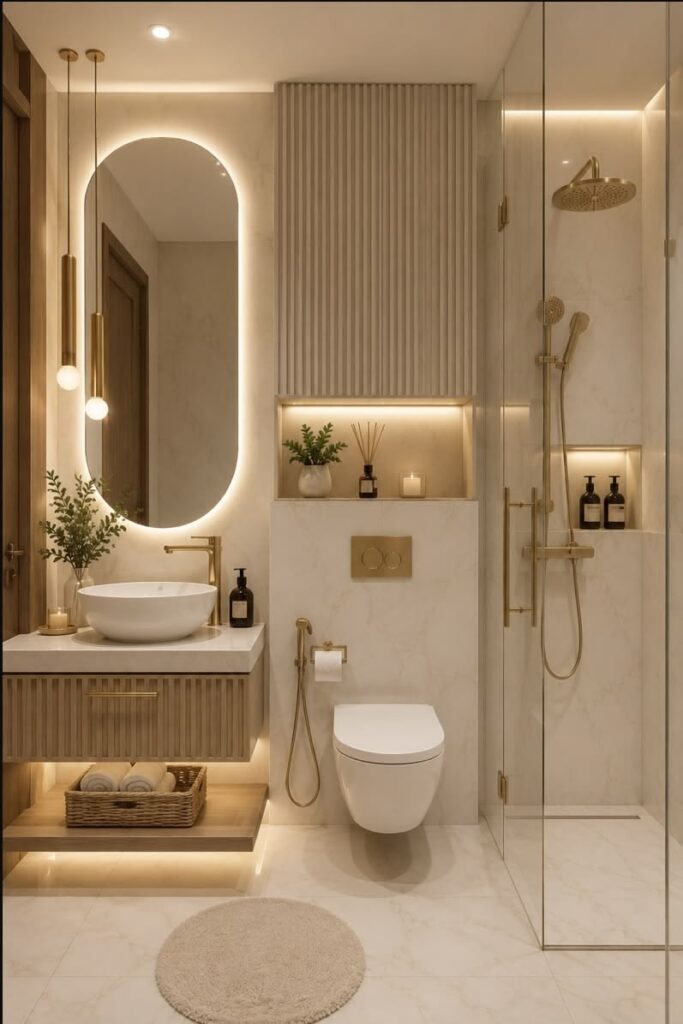
Most bathrooms in Gurugram apartments fall in the 30–45 sq. ft. range — functional, but easy to make feel even smaller with the wrong choices. The good news is that a compact bathroom doesn’t have to feel cramped. With the right layout, tiles, and lighting decisions, a small bathroom can feel just as considered as a much larger one. Here’s what actually works within standard apartment dimensions.
Start With What’s Fixed vs. What Can Change
Before planning anything visual, it helps to know what you’re working with:
Usually fixed (unless you’re doing major plumbing work):
- Drain and plumbing line locations
- The general position of the toilet and shower area
- Ventilation duct or window placement
Easy to change without major plumbing changes:
- Tiles, colors, and finishes
- Vanity style and storage
- Lighting layout
- Fixtures like the showerhead, taps, and mirror
- Shower partition or curtain
Working within the existing plumbing layout keeps renovation costs significantly lower and the timeline shorter — most small bathroom renovations that avoid major plumbing changes can be completed in 10–15 days.
Tile Choices That Make a Small Bathroom Feel Bigger
Tiles have the single biggest visual impact in a small bathroom, more than furniture or fixtures.
- Large-format tiles (600x600mm or bigger) with minimal grout lines create a more seamless, spacious-looking surface compared to smaller tiles with lots of grout joints
- Light colors — creams, whites, and soft greys — reflect more light and make walls feel like they’re receding rather than closing in
- Vertical tile layouts on walls draw the eye upward, making the ceiling feel higher than it actually is
- Reserve darker or bolder tiles for one accent wall (like the shower niche) rather than using them across the whole bathroom, which can make the space feel enclosed
Space-Saving Fixtures and Layout
Wall-hung vanities free up visible floor space, since you can see the floor continue underneath — this alone makes a bathroom feel noticeably larger than a floor-standing vanity of the same size.
Wall-hung toilets with a concealed cistern have the same effect, and also make cleaning the floor easier.
A glass shower partition instead of a full brick or tile shower enclosure keeps sightlines open across the room, rather than visually cutting the bathroom into two separate boxes.
Corner or compact shower trays work well in bathrooms under 35 sq. ft., avoiding the need for a full rectangular shower zone that eats into usable space.
Storage Without Clutter
Small bathrooms need smart storage more than large ones, since there’s no room for freestanding cabinets or shelving units.
- A recessed niche built directly into the shower wall stores toiletries without adding any visible bulk
- A mirrored cabinet above the vanity doubles as both storage and a mirror, saving wall space compared to having both separately
- Wall-mounted hooks and holders instead of freestanding accessories keep the floor and countertop clear
Lighting Makes a Bigger Difference Than Most Homeowners Expect
Bathrooms often rely on a single overhead light, which creates flat, uneven lighting and makes the space feel smaller and less inviting.
- A backlit mirror provides even, shadow-free light for grooming tasks while adding a modern touch
- Cove lighting in a simple gypsum false ceiling adds a soft, spa-like glow without requiring a complex ceiling design
- Stick to warm white lighting (around 3000K) rather than cool white, which tends to feel clinical in a small, enclosed space
- If the bathroom has few electrical points, plan additional ones during renovation — retrofitting lighting later is far more disruptive
Dealing With Gurugram’s Humidity
Humidity is one of the most underestimated factors in bathroom renovations, especially in Gurugram’s monsoon months.
- Ensure the exhaust fan is properly sized for the room and vents outside rather than into a shared shaft where possible
- Choose grout and sealant rated for wet areas, and have them redone every few years to prevent seepage
- Avoid painted finishes near the wet zone — tiled surfaces up to at least shoulder height handle moisture far better over time
Realistic Cost Expectations for a Small Bathroom Renovation
- Cosmetic refresh (new fittings, repainting non-wet areas, lighting upgrade, accessories): ₹25,000 – 60,000
- Mid-level renovation (new tiles, vanity, fixtures, minor layout tweaks): ₹80,000 – 1.8 lakh
- Full renovation (layout changes, waterproofing redo, premium fittings): ₹2 – 4.5 lakh and above
The biggest cost swing usually comes from whether waterproofing needs to be redone — this is essential if there’s any sign of seepage, but adds meaningfully to both cost and timeline.
Planning Your Renovation the Right Way
The most common mistake in small bathroom renovations is choosing tiles and fixtures first, then figuring out lighting and storage around them. Planning all four — layout, tiles, storage, and lighting — together from the start leads to a far more cohesive result, and often saves money by avoiding rework.
At Navchitra Designs, we assess your existing plumbing and layout first, so you know upfront what’s realistically achievable within your budget before any design decisions are finalized.
Get a Free Consultation and let’s plan a bathroom renovation that fits your Gurugram apartment.
Frequently Asked Questions
Can I renovate a small bathroom without changing the plumbing? Yes, in most cases — keeping the existing plumbing layout and focusing on tiles, fixtures, storage, and lighting significantly reduces both cost and renovation time.
How long does a small bathroom renovation take in Gurugram? A cosmetic refresh can take as little as 5–7 days, while a full renovation involving layout changes and waterproofing typically takes 15–20 days.
What’s the cheapest way to make a small bathroom look bigger? Switching to large-format, light-colored tiles and adding a backlit mirror are two of the most cost-effective changes that make a noticeable visual difference without major renovation work.
Is waterproofing necessary for every bathroom renovation? Not always — if there’s no existing seepage and you’re not changing the layout or plumbing, waterproofing may not need to be redone. However, if there’s any sign of dampness in adjoining walls or the ceiling below, it should be addressed before other renovation work begins.